Local SEO · 12 min read · November 10, 2026
How We Get Local Businesses Ranked on Google Maps, Google Search and AI
Customers find local businesses in three places now: the map, the search results and AI answers. Here is the exact local SEO system we run for our clients to show up in all three, in every town they serve.
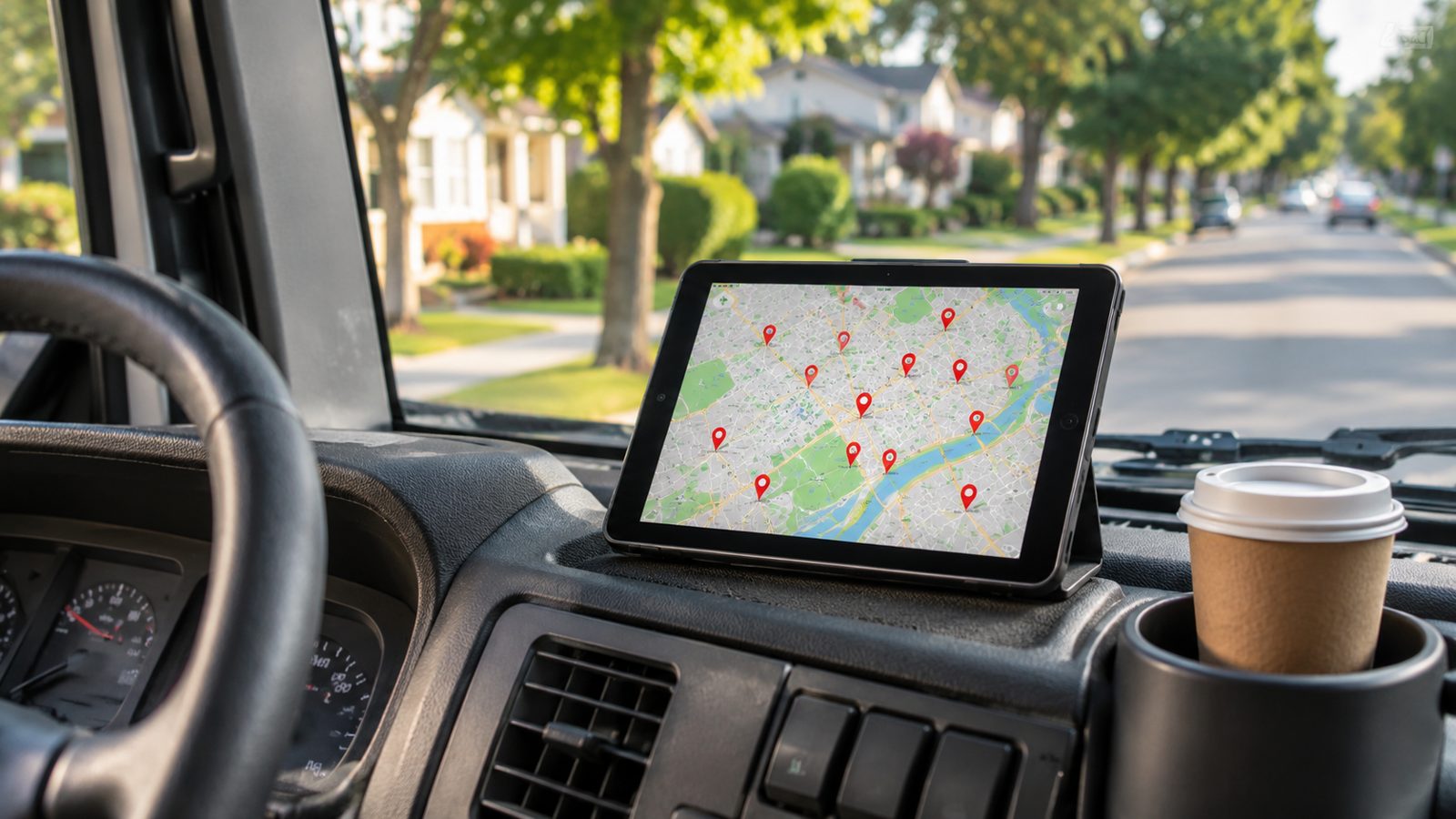
Your customers look for you in three places now: the map at the top of Google, the search results under it, and the answer ChatGPT or Google's AI gives when they ask who to hire. Most local businesses show up in one of those, close to the shop, and nowhere else. The jobs in the next town over go to whoever Google understands better.
This is the system we run for every local SEO client. It's the same steps in the same order, whether you run a roofing company, a septic service, a med spa or a real estate team. Nothing here is a trick. It's the work most businesses know they should do and never get to, done every week.
Three places customers find you, and what each one looks at
Google Maps (the map pack). The three businesses under the map. Google picks them by relevance (does your profile clearly match the search), distance (how close you are to the person searching) and prominence (reviews, links, mentions, how active you are). You can't move your shop, so relevance and prominence are where the work goes. We break the map down in How Google Maps Ranks Local Businesses.
Google search (the organic results). The websites under the map. Distance matters much less here. A page about "septic pumping in a town 20 miles from your yard" can rank in that town even when the map can't reach you. This is how a business shows up across its whole service area.
AI answers. ChatGPT, Google's AI Overviews, Gemini and Perplexity usually name three to five businesses. They pull from your Google profile, your reviews, your website, directories and anywhere else your business is mentioned. The businesses with clear, consistent facts everywhere are the ones that get named. More in How Local Businesses Show Up in ChatGPT and Google AI Overviews.
The good news is that one system feeds all three. The same profile, pages and reviews that win the map also win the search results, and they're what AI reads.
Step 1: Measure before we touch anything
The first week is a baseline, so in three months you can see exactly what changed instead of taking our word for it.
- Map grid scan. We check where you rank on the map from 49 points around your business for your top three services. It looks like a grid of colored dots: green near the shop, red where you disappear. Most owners have never seen it and it explains a lot.
- Tracked keywords. We pull real search volume for every service in every town you serve, then track the 20 to 50 that matter most, every week.
- AI check. We ask ChatGPT, Perplexity, Gemini and Google "who's the best [service] in [your city]" and screenshot who gets named.
- Site audit. Broken pages, missing titles, slow pages, and pages Google can't or won't index.
- Reviews and competitors. Your review count, rating and reply rate next to the three competitors you lose jobs to, plus the searches they rank for that you don't.
Step 2: Fix the foundation
Your website
A lot of small business sites quietly confuse Google. The same page loads at four different addresses (with and without www, with and without a slash at the end), so Google can't tell which one to rank and reports them as duplicates. We set one clean address for every page, redirect the rest to it, and submit a sitemap so Google finds every page. If you're moving from an old site, every old address gets pointed at its new page so you keep whatever rankings it had.
Every page also gets structured data: code Google and AI read that says what the business is, what it does, where it works and how to contact it. It's invisible to visitors and one of the clearest signals you can send.
Your Google Business Profile
This is where map rankings start. The right primary category (usually the one the top-ranking competitor uses), every real service listed, service areas, hours, real job photos, a booking link and the questions customers actually ask on the phone. The full list is in our Google Business Profile Checklist.
Your listings everywhere else
Your business name, address and phone number need to match exactly on Apple Maps, Bing, Yelp, the BBB, Facebook, Nextdoor, Angi and the directories in your industry and city. Old addresses and old phone numbers get fixed first. Google and AI both trust a business more when every source agrees, and Bing's listings matter more than most people think, because ChatGPT's search leans on Bing.
Step 3: A real page for every service in every town
This is the biggest lever for showing up beyond your own zip code, and the one most agencies get wrong. The lazy version is one template with the city name swapped out 50 times. Google calls those doorway pages and ignores them.
Here's what we build instead, using a dumpster rental and septic company we work with in New Orleans as the example. They deliver to 34 towns across seven parishes. Their site now has 164 pages: a hub page for each service, then a page for each service in each town and parish. Every town page carries facts that are only true for that town:
- The real driving distance from their yard to that town, and the route the truck takes to get there.
- The ZIP codes and neighborhoods they cover there.
- Who issues the permit if a dumpster has to sit on the street in that town.
- The nearby towns they also serve, linked to their own pages.
- A local FAQ, plus structured data telling Google which business, which service and which town the page is about.
Nobody else can copy that page, because it's built from the business's own facts. That's the difference between a page that ranks and one that gets ignored. We only build pages for towns where people actually search for the service or where you already do jobs, and we never write a claim you didn't give us: no made-up prices, response times or reviews. The full playbook is in Location Pages That Rank.
Step 4: Reviews every week, not in bursts
Reviews move the map faster than anything else, and they're the first thing a customer checks before calling. They're also one of the main things AI reads when it decides who to recommend.
- Every finished job gets a review request by text, sent automatically, with a direct link to your review page.
- The request asks the customer to mention what you did and where. A review that names the service and the customer's town helps you rank for that service in that town. We never script or fake a review.
- Every review gets a reply within 48 hours. One and two star reviews go to you first, before anything is posted.
A steady few reviews every week looks natural and keeps your profile fresh. Fifty in a month and then nothing looks odd. The whole system is in How to Get 10+ Google Reviews a Month.
Step 5: Keep the profile and the site active
Google favors businesses that look open and busy. Every week:
- A Google Business Profile post with a real job photo, what you did and the town it was in.
- Blog posts that answer the questions your customers ask on the phone: what it costs, how long it takes, what size they need, whether they need a permit. Each one answers the question in the first two sentences, because that's the part AI quotes, and links to the matching service and town page.
- Rewrites for pages sitting on page two. A page at position 11 is close. More local detail, better answers and a few internal links often get it onto page one.
Step 6: Become the answer AI gives
There's no separate trick for ChatGPT. AI recommends businesses it can describe confidently, and it gets that confidence from the same work above. What we add on top:
- The same facts everywhere. Name, services, towns and phone number match on your site, your profile and every listing, so AI isn't guessing.
- Pages written to be quoted. A clear question, a direct answer, then the detail. FAQ sections on every service and town page.
- Mentions on other sites. Local news, "best of" lists, your chamber of commerce, supplier and partner pages. AI trusts what other people say about you more than what you say about yourself.
- A monthly check. We ask the AI tools the same questions every month and show you whether you're named.
Step 7: Earn local links
Links from other local websites tell Google you're a real, established business in that area. We go after the ones a real business would have: your chamber of commerce, the dealer or installer page of a brand you use, a sponsorship of a little league team or a church event, partner businesses that send you work. No bought link packages. They don't work anymore and they can get a site penalized.
What you see every month
One page, results first:
- Calls, form fills and booked jobs from Google Maps and search.
- Your map grid this month next to where you started.
- How many tracked searches you're in the top 3 and top 10 for, and the biggest movers.
- Whether ChatGPT and Google's AI name you, with screenshots.
- New reviews and your rating, then what we did this month and what's next.
How long it takes
Honest version. The first two weeks are fixes and profile cleanup, and Google needs a few weeks after that to recrawl. In months one to three, new pages get indexed, you start showing up for town-level searches, and your map visibility grows around the shop. Months three to six are where the competitive searches and the wider map radius come in. How fast depends on your market, your competitors and how many reviews come in. Anyone who promises you the number one spot by a date is guessing, or doing something that will hurt you later.
What we won't do
- Stuff keywords into your business name on Google. It's the fastest way to get a profile suspended.
- Buy or fake reviews, or gate reviews so only happy customers get asked.
- Build copy-paste city pages, buy links, or list addresses you don't operate from.
- Put a price, a guarantee or a "same-day" promise on your site that you didn't give us.
FAQ
How long does local SEO take to work?
Fixes and profile changes can show up within weeks. Town-level searches usually start moving in the first three months, and competitive searches take three to six months or more depending on your market.
Do I need a website if I already have a Google Business Profile?
Yes, if you want to show up beyond the area around your shop. The profile wins the map near you. Service and town pages on a website win the search results in every other town you serve, and they give AI far more to work with.
Can you guarantee a number one ranking?
No, and nobody honest can. Google decides. What we can promise is the work, done every week, and a report that shows exactly what moved.
Do I need SEO if I'm already running Google Ads?
Ads stop the day you stop paying. SEO keeps working. The best setup is both: ads for calls this week, SEO so you pay less for every call over time. The same landing pages and reviews help both.
How do I get my business recommended by ChatGPT?
Make sure your facts are identical everywhere, earn reviews that mention your services and towns, publish pages that answer customers' real questions directly, and get mentioned on other local sites. AI recommends the businesses it can describe with confidence.
What do you need from me to get started?
Access to your Google Business Profile and website, a list of your services and the towns you serve, and anything real we can use as proof: licenses, insurance, job photos and the prices you're comfortable publishing. We handle the rest.
How we solve this: WhaleScale Media runs this whole system for you: the profile, the town pages, the reviews, the weekly posts and the monthly report that starts with booked jobs. You run the jobs. We make sure Google Maps, Google search and AI know where you work.